Most people still think of the Balkans as a budget backpacker destination. They’re wrong. Bosnia and Montenegro offer some of the most extraordinary travel experiences in Europe — stunning Ottoman architecture, medieval walled cities, dramatic Adriatic coastline — and if you know where to look, you can do it all in serious style. Here’s everything you need to know.
Why Bosnia & Montenegro?
These two countries punch well above their weight. Sarajevo is one of the most historically layered cities in Europe. Mostar’s iconic bridge is genuinely one of the most beautiful things you’ll ever see. And Kotor — a UNESCO World Heritage walled city on a bay that looks like it was designed by a film director — is flat-out one of the most dramatic places on the Mediterranean.
The best part? Even at the luxury end, prices are significantly lower than Western Europe. A five-star experience here costs what a mid-range hotel costs in Paris.
Sarajevo: Where East Meets West
Where to Stay
For a luxury stay in Sarajevo, Hotel Europe is the iconic choice — a beautifully restored Austro-Hungarian building in the heart of the old town that’s been hosting guests since 1882. Rooms are elegant, service is impeccable, and the location couldn’t be better. Alternatively, Hotel Sarajevo 1984 offers a more boutique feel with stunning views over the city.
What to Do
- Walk the Baščaršija — Sarajevo’s Ottoman-era bazaar is the heart of the city. Lose an afternoon wandering its cobblestone lanes, drinking Bosnian coffee (thick, strong, served in a džezva), and browsing the copper workshops.
- Visit the Latin Bridge — the spot where Archduke Franz Ferdinand was assassinated in 1914, triggering World War I. The museum next door is small but fascinating.
- The Yellow Fortress — hike up at sunset for panoramic views over the city’s minarets and church spires. Genuinely breathtaking.
- Tunnel of Hope — a sobering but essential visit to the tunnel built during the 1990s siege of Sarajevo. Context that makes you appreciate the city even more.
Where to Eat & Drink
- Inat Kuća (“The Spite House”) — a historic restaurant in a 400-year-old building serving traditional Bosnian dishes. Order the begova čorba (a rich beef and vegetable soup) and ćevapi.
- Klopa — more modern Bosnian cuisine in a beautifully designed space. The lamb is exceptional.
- Park Prinčeva — a restaurant perched on the hillside above the city with sweeping views. Perfect for a long, leisurely dinner.
Mostar: The Bridge, The Old Town, The Magic
Where to Stay
Villa Anri is a gorgeous boutique guesthouse steps from the Old Bridge — intimate, beautifully decorated, and with some of the most attentive hospitality you’ll find anywhere in the region. For something grander, Hotel Kriva Ćuprija sits right on the riverbank with the bridge in view.
What to Do
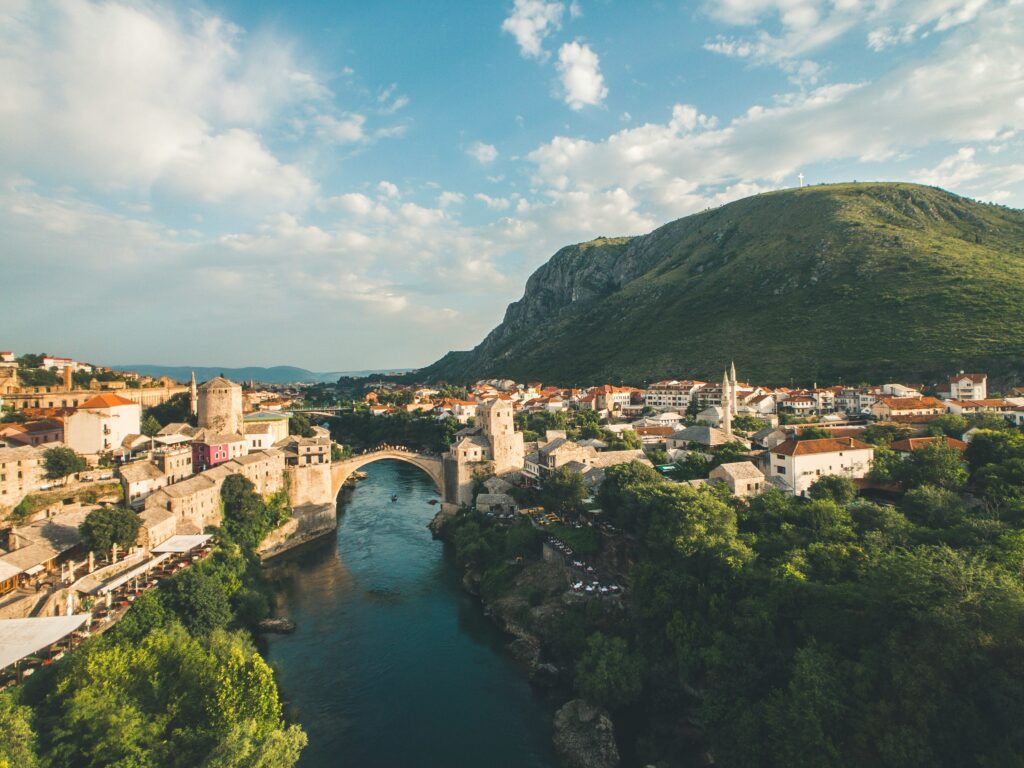
- Stari Most (The Old Bridge) — rebuilt after being destroyed in the 1990s war, this 16th-century Ottoman bridge is one of the most beautiful structures in Europe. Visit at golden hour when the stone glows amber. Watch the Mostari divers (local men who’ve been jumping from the bridge for centuries) — it’s a genuine tradition, not a tourist show.
- Old Town stroll — the cobblestoned bazaar area around the bridge is compact but beautiful. Spend a morning before the crowds arrive.
- Kravice Waterfalls — a 45-minute drive from Mostar, these stunning waterfalls are a perfect half-day trip. Hire a private driver for the day.
- Blagaj Tekke — a 16th-century Dervish monastery built into a cliff face at the source of the Buna River. One of the most atmospheric places in the entire country.
Where to Eat & Drink
- Tima-Irma — hands down the best ćevapi in Mostar, maybe in the entire country. Simple, no-frills, absolutely perfect.
- Hindin Han — a beautiful terrace restaurant on the river with excellent traditional Bosnian food and views of the bridge.
- Ali Baba — for a truly memorable meal, this restaurant is set inside a cave. Atmospheric doesn’t even cover it.
Kotor: The Adriatic’s Best Kept Secret
Where to Stay
Cattaro Boutique Hotel inside the old walled city is the dream — staying within the medieval walls, waking up to the sound of church bells, wandering out to the main square for morning coffee. Hotel Forza Luna is another excellent option with stunning bay views. For the ultimate splurge, look at private villa rentals on the bay — some of the most beautiful properties in the Mediterranean are here for a fraction of the Côte d’Azur price.
What to Do
- Walk the City Walls — 1,350 metres of medieval walls climbing up the mountain behind the city. It’s a workout (1,350 steps to the top) but the views over the Bay of Kotor are among the most spectacular in Europe. Go early morning before the cruise ship crowds arrive.
- Boat trip on the bay — hire a private boat for a half-day to explore the bay, visit the island church of Our Lady of the Rocks, and swim in the impossibly clear Adriatic. This is the luxury Kotor experience.
- Perast — a tiny, perfectly preserved Baroque town 12km along the bay from Kotor. Fewer than 400 people live here. It’s absurdly beautiful.
- Get lost in the old town — Kotor’s walled city is tiny and labyrinthine. The cats are famously abundant (the city has a cat museum). No agenda required — just wander.
Where to Eat & Drink
- Galion — the best fine dining in Kotor, right on the water with views of the bay. Excellent seafood, great wine list, impeccable service.
- Restaurant Stari Mlini — a 200-year-old watermill converted into a restaurant in nearby Ljuta. Worth the short drive.
- Bokun Wine Bar — for Montenegrin wines (criminally underrated) in a beautiful courtyard setting inside the old town.
Practical Luxury Tips
Getting around: Hire a private driver for the Bosnia leg — roads between Sarajevo and Mostar are scenic but winding, and having a knowledgeable local driver is worth every cent. For Montenegro, rent a car. The coastal drive along the bay is one of the great European road trips.
Best time to visit: May-June or September-October. July and August are beautiful but Kotor especially gets very busy with cruise ship tourists.
Currency: Bosnia uses the Convertible Mark (BAM), Montenegro uses the Euro. ATMs are widely available.
How long to spend: Minimum 7-10 days for all three destinations done properly. Two weeks is ideal.
Flights: Fly into Sarajevo, out of Tivat (Kotor’s airport) or Dubrovnik. Easy one-way routing with no backtracking.
The Bottom Line
Bosnia and Montenegro are two of the most rewarding destinations in Europe right now — rich in history, jaw-droppingly beautiful, genuinely warm and hospitable, and still at a price point where luxury travel feels almost guilt-free. Sarajevo will move you. Mostar will stop you in your tracks. Kotor will make you want to cancel your flight home.
Book the trip. You won’t regret it.