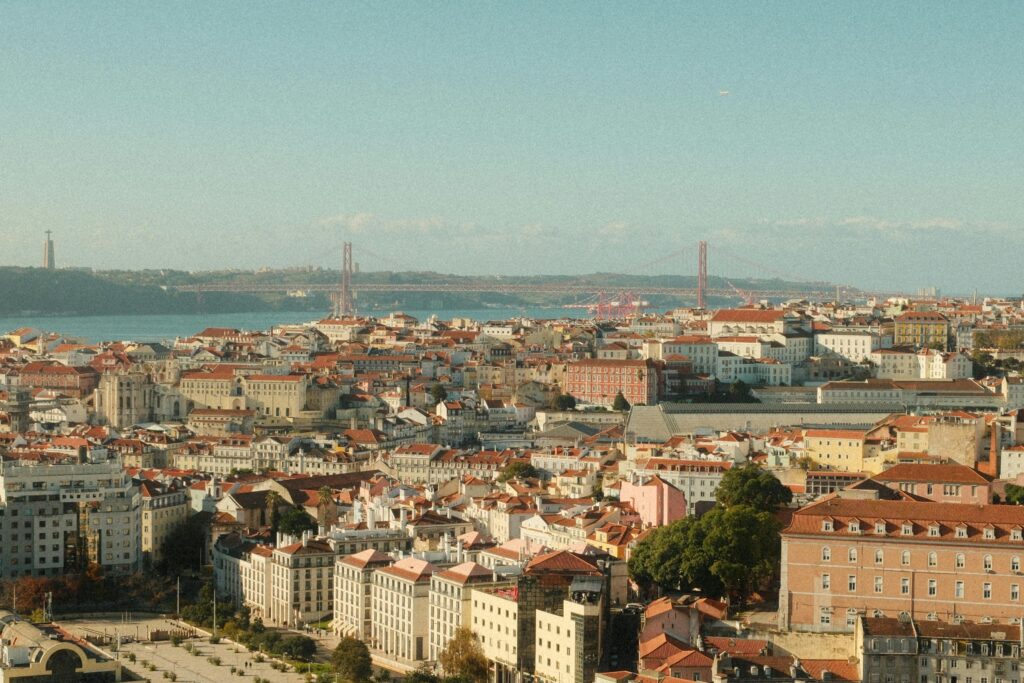
Quick answer: A 10-day Portugal trip on a mid-range budget costs roughly $2,000 to $2,700 per person (not including flights), covering comfortable hotels, good restaurants, day trips, and trains. Split your time between Lisbon (4 nights), Porto (3 nights), and the Algarve or Sintra region (3 nights). Shoulder season (April to May or September to October) is the sweet spot for weather and prices.
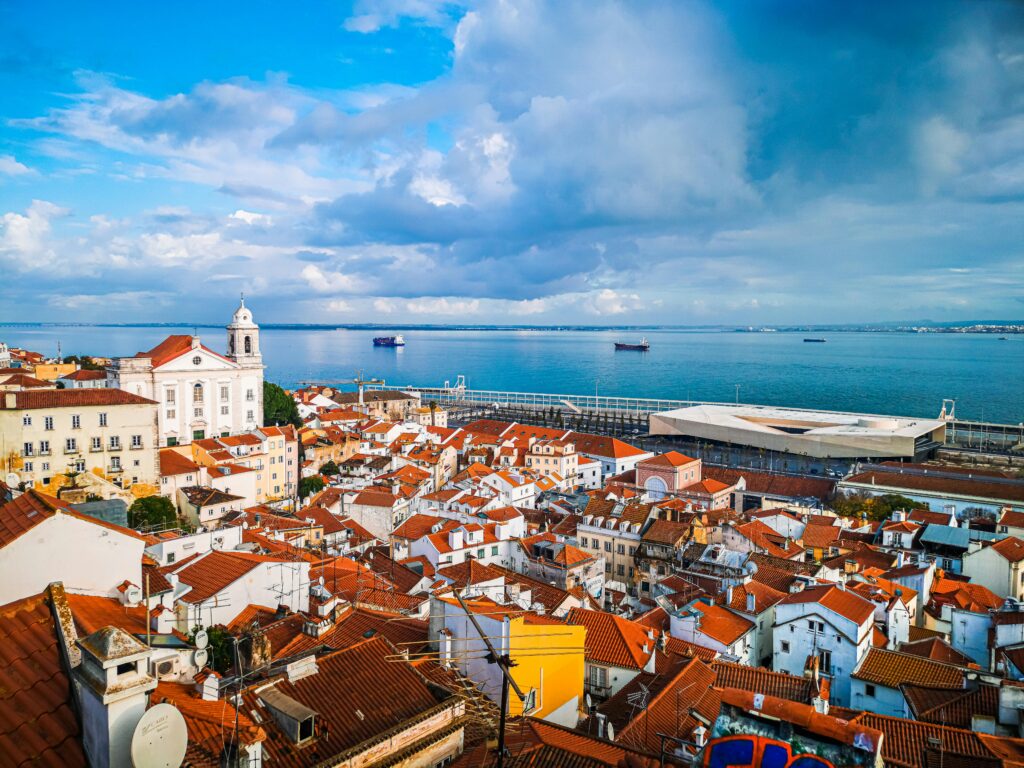
I’ll be honest with you: Portugal was not originally on my radar. I’d been eyeing Italy for months, but every time I priced out a 10-day trip to Rome and Florence, the numbers made me want to cry into my $6 bodega coffee. Then a coworker who’d just come back from Lisbon showed me her photos and her receipts, and I was sold. She’d eaten incredible seafood, stayed in a gorgeous boutique hotel in the old town, done a wine tasting day trip, and spent less in 10 days than I’d budgeted for a week in Italy.
Portugal is one of the best value destinations in Western Europe right now, and it’s not close. You get the food, the history, the coastline, the wine, all of it, for significantly less than you’d pay in France, Spain, or Italy. This guide covers exactly how to plan a 10-day trip, what it actually costs, where to stay, what to eat, and the stuff I wish someone had told me before I went.
What’s the Best Time to Visit Portugal?
The best months for a 10-day Portugal trip are April to May and September to October. You’ll get warm weather (65 to 80°F), fewer crowds than summer, and hotel prices that are 30 to 40% lower than peak season.
Summer (June through August) is when Portugal gets truly hot, especially in Lisbon and the Algarve, where temperatures regularly push past 90°F. It’s also when every other tourist in Europe shows up, so prices spike and you’ll be waiting in lines for everything from Sintra palaces to Belém’s famous custard tarts. If summer is your only option, go for it, but book accommodations early and prepare to sweat.
Winter (November through February) is the cheapest time to go, with hotel rates dropping to $80 to $120 per night for mid-range properties. The tradeoff is rain (10 to 15 days per month) and shorter daylight hours. Honestly, Lisbon in January is still mild compared to New York. I’d take 50°F and drizzly in Alfama over 15°F and windy on the L train platform any day.
Pro tip: if you can swing the last two weeks of September, that’s the move. The summer crowds have cleared out, the weather is still gorgeous, and you’ll catch the wine harvest season in the Douro Valley.
How Much Does a 10-Day Portugal Trip Actually Cost?
Real talk, here’s what a mid-range 10-day Portugal trip looks like in 2026, per person:
| Category | Budget (per person) | Notes |
| Flights (from NYC) | $450 to $900 round trip | Shoulder season, booked 6 to 8 weeks out |
| Accommodation (10 nights) | $700 to $1,200 | Mid-range hotels, $70 to $120/night per person (double occupancy) |
| Food | $400 to $600 | Mix of tascas, restaurants, and market meals |
| Transportation (in-country) | $150 to $250 | Trains, metro, occasional Bolt/Uber |
| Activities & Sightseeing | $200 to $350 | Museums, palace tickets, wine tasting, day tours |
| Miscellaneous | $100 to $150 | SIM card, souvenirs, coffee addiction |
| Total (excluding flights) | $1,550 to $2,550 | |
| Total (including flights) | $2,000 to $3,450 |
Prices as of early 2026. Prices fluctuate, especially for accommodation and flights. Book early for the best rates.
A couple of things to flag here. First, those activity costs add up sneakily. A $5 museum ticket here, a $20 palace entry there, a $45 wine tour, and suddenly you’ve spent $35 per day on “just looking at stuff.” Budget for it. Second, food in Portugal is genuinely a great deal compared to the rest of Western Europe. You can eat a full lunch at a neighborhood tasca (a traditional, no-frills local restaurant) for $10 to $15, and even a nice sit-down dinner with wine rarely tops $30 to $40 per person outside of the tourist traps.
For finding cheap flights to Lisbon from the East Coast, the process I use works really well here. TAP Air Portugal runs direct flights from JFK and Newark, and if you book during shoulder season, round trips in the $430 to $600 range are very doable. The flight is about 7 hours, which, after surviving the L train for five years, feels like nothing.
How Should You Split 10 Days in Portugal?
Here’s the itinerary breakdown I’d recommend for a first-timer who wants value and quality:
Days 1 to 4: Lisbon (4 nights)
Lisbon deserves at least 3 full days, plus a day trip to Sintra. It’s the capital, the food scene is incredible, and you’ll want time to just wander the neighborhoods without feeling rushed.
Days 5 to 7: Porto (3 nights)
Take the train up to Porto (about 2.5 hours on the high-speed Alfa Pendular, roughly $25 to $35 one-way if booked on the CP (Comboios de Portugal) website). Use one day for a Douro Valley wine tour.
Days 8 to 10: The Algarve or flexible
Fly from Porto to Faro (about 1.5 hours, budget airlines run this route frequently for $30 to $60 one way) and spend your last days on the coast. Or, if beaches aren’t your thing, use these days to slow down in Porto, take a day trip to Braga or Guimarães, or even loop back to Lisbon for things you missed.
The key thing: don’t try to add more cities. I know it’s tempting to squeeze in Coimbra, Évora, Sintra as an overnight, and a beach town. You’ll spend half your trip on trains and buses instead of actually enjoying the places you’re in. Three locations in 10 days is the sweet spot.
Where Should You Stay in Lisbon?
For mid-range travelers, the best neighborhoods in Lisbon are Baixa/Chiado and Graça/Mouraria. Here’s the breakdown.
Baixa and Chiado are the most central. You’re walking distance to basically everything, the train to Sintra leaves from Rossio station right here, and there’s a huge concentration of restaurants and shops. Mid-range hotels run $100 to $180 per night for a double room in shoulder season. The My Story Hotel Rossio and Hotel Da Baixa are both solid picks in this area.
Graça and Mouraria are where I’d stay if I were going back. These neighborhoods are 10 to 15 minutes on foot from downtown, but they’re 20 to 30% cheaper and way more interesting. Mouraria is Lisbon’s most multicultural neighborhood, and it has some of the best affordable food in the city. Graça has jaw-dropping viewpoints and a local, lived-in feel that the tourist center doesn’t. Hotels here run $80 to $140 per night.
Skip Bairro Alto unless you’re planning to stay out until 3 a.m. every night. It’s the nightlife district, which means the noise levels after midnight are brutal. Great for a night out, terrible for sleeping.
Pro tip: Bolt (basically Uber, but often cheaper) is everywhere in Lisbon and rides within the city center rarely cost more than $4 to $6. When you’re tired from climbing those hills (and trust me, Lisbon hills are no joke), it’s worth it.

Where Should You Stay in Porto?
Porto is smaller and more walkable than Lisbon, so location matters a little less. But the Ribeira district (along the Douro River) and the Cedofeita/Bolhão area are your best bets.
Ribeira is the postcard Porto, right along the water with views of the port wine cellars across the river in Vila Nova de Gaia. It’s photogenic as anything, but it is the most tourist-heavy zone. Hotels run $90 to $160 per night in shoulder season.
Cedofeita and Bolhão are where locals actually hang out. You’re close to Bolhão Market (recently renovated and absolutely worth a morning visit), tons of great restaurants, and the São Bento train station. Hotels here are $70 to $130 per night and the neighborhood has a much more relaxed, less “performing for tourists” energy.
Porto is honestly a city where $100 to $120 per night gets you a genuinely nice hotel. The value compared to Lisbon is noticeable, especially on food and wine. A glass of port at a riverside bar costs $3 to $5. A full seafood dinner might run you $20 to $25.
What to Eat in Portugal (The Real List)
Okay but this is the section I actually care about. Portugal’s food scene is lowkey one of the best in Europe, and it doesn’t get nearly enough credit.
The essentials you need to try:
Pastéis de nata (custard tarts). You’ll eat approximately 47 of these in 10 days. The most famous spot is Pastéis de Belém in Lisbon’s Belém neighborhood, where they’ve been making them since 1837. The line looks insane but it moves fast, and the tarts are about $1.50 each. That said, honestly, Castro (a boutique pastel de nata shop with locations in both Lisbon and Porto) makes them just as well with a shorter wait. A nata and an espresso for under $3 is the cheapest luxury you’ll find in Europe.

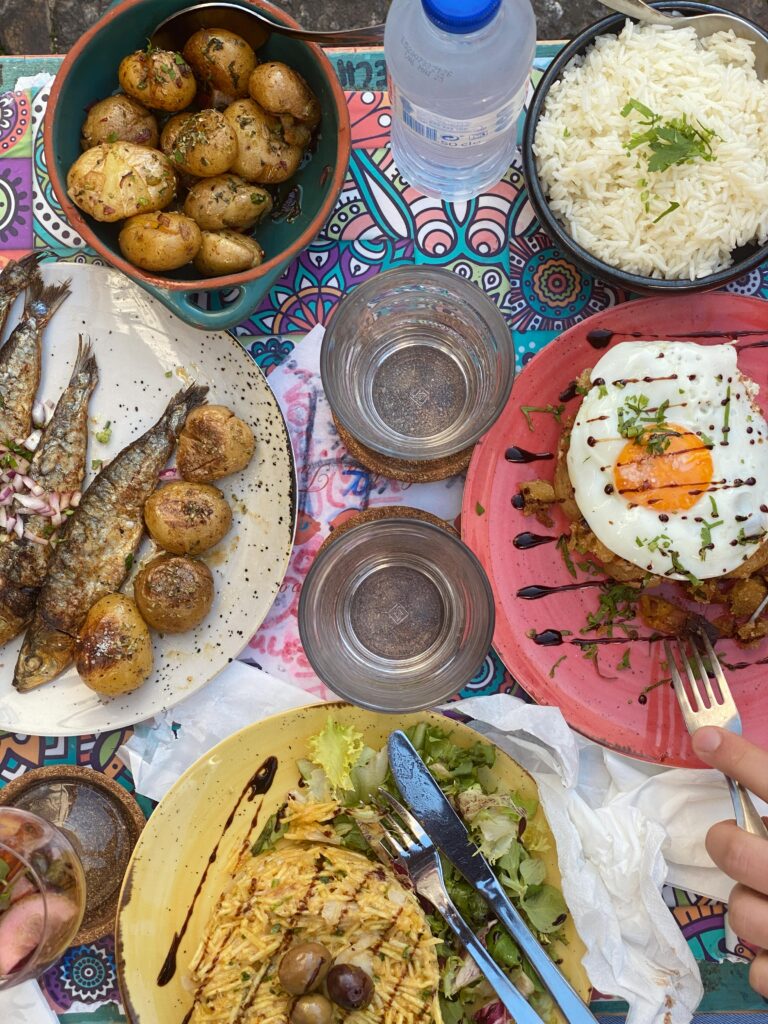
Bacalhau (salt cod). The Portuguese have over 365 ways to prepare salt cod, supposedly one for every day of the year. The little fried croquettes (pastéis de bacalhau) are the perfect snack, usually $1 to $2 each. For a full bacalhau dish at a restaurant, expect $12 to $18.
Francesinha (Porto’s famous sandwich). This is Porto’s signature dish, and it’s essentially a meat-loaded sandwich smothered in melted cheese and a spicy beer-based sauce, served with fries. It sounds like drunk food (and it kind of is), but a good francesinha is an experience. Expect to pay $10 to $14 at a solid local spot.
Grilled sardines. Best between June and September when they’re in season. Find a neighborhood restaurant where you can smell the grill from outside, sit down, order sardines, bread, a salad, and a bottle of vinho verde (green wine, crisp and slightly fizzy). That meal will cost you about $12 to $18 and it’ll be one of the best things you eat all trip.
Seafood rice (arroz de marisco). This is Portugal’s answer to paella, and not gonna lie, I think it’s better. Rich, tomatoey broth loaded with shrimp, clams, and whatever else the kitchen pulled in that day. Order one to share, it’s usually $20 to $30 and easily feeds two.
Where to eat without getting tourist-trapped: look for tascas. These are small, family-run restaurants with handwritten menus or specials on chalkboards. They’re usually away from the main squares and landmarks. The food is hearty, portions are big, and a full meal with wine rarely tops $15 per person. In Lisbon, try the tascas in Mouraria and around Anjos. In Porto, head to the Cedofeita neighborhood.
One cultural note: if you grow up eating Chinese food the way I did, you’ll notice the Portuguese approach to seafood is refreshingly similar to how my mom cooks. Simple preparations, fresh ingredients, not a lot of fuss. The grilled fish at a place like Ultimo Porto in Lisbon (only open for lunch, get there early) reminded me of family dinners in a way I didn’t expect from a European country.
What to Do in Portugal: The Highlights
Lisbon (Days 1 to 4)
Day 1: Alfama and the old city. Start at Praça do Comércio, walk up through Alfama’s maze of narrow streets, visit São Jorge Castle ($11 entry, worth it for the views alone), and end the evening at Miradouro da Graça for sunset. Grab dinner at a tasca in Mouraria.
Day 2: Belém and western Lisbon. Take the 15E tram to Belém. Hit Jerónimos Monastery ($12 entry) in the morning before the tour buses arrive, walk along the waterfront to Belém Tower, and eat your body weight in pastéis de nata at Pastéis de Belém. In the afternoon, head back to Chiado and explore the shops and cafes. If you’re into it, stop by A Ginjinha near Rossio square for a $1.50 shot of ginjinha (cherry liqueur). It’s been serving the stuff since 1840.
Day 3: Sintra day trip. Catch the train from Rossio station (about 45 minutes, $5 round trip). Get to Pena Palace when it opens at 9:30 a.m. before the crowds descend ($16 entry for palace and park). Then walk down to Quinta da Regaleira ($10 entry), which is honestly the more interesting of the two, with underground tunnels and an inverted tower you can climb down. Two palaces is enough for one day. Don’t try to fit in three.
Day 4: Free morning, travel to Porto. Explore whatever you missed, or just sit at a cafe in Príncipe Real with a coffee and watch the city wake up. Catch an afternoon Alfa Pendular train to Porto.
Porto (Days 5 to 7)
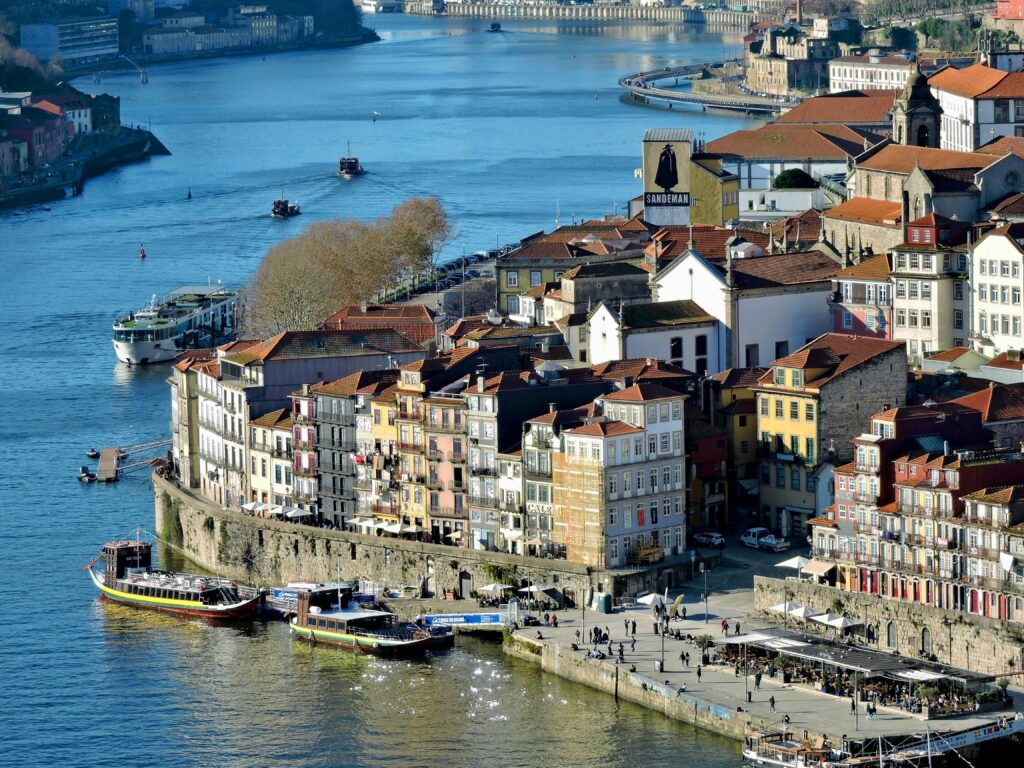
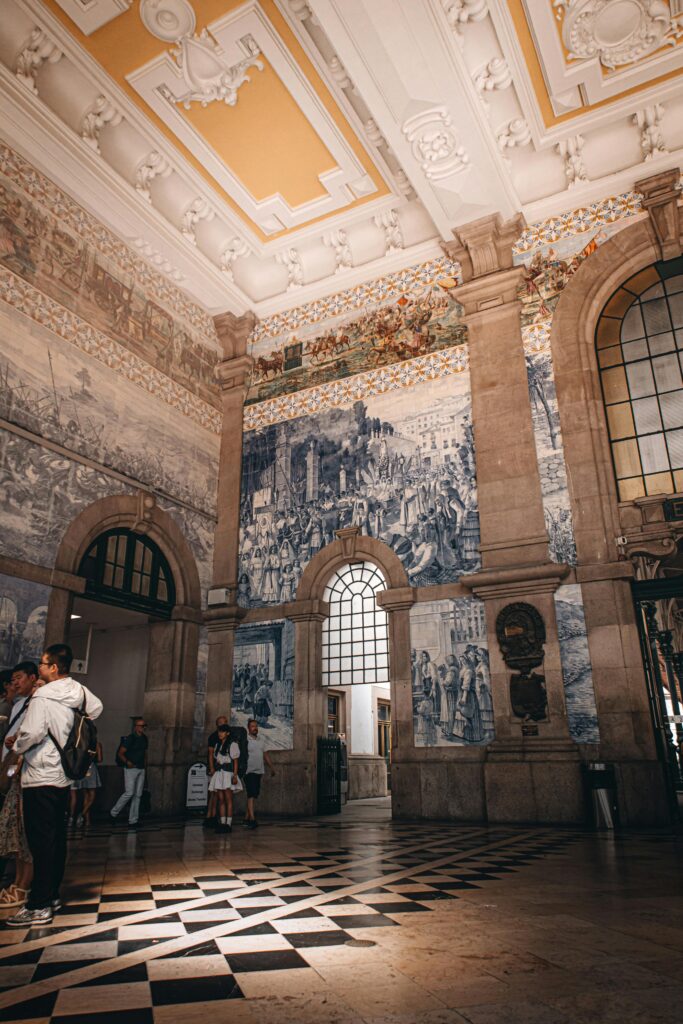
Day 5: Porto’s main sights. São Bento station (the tile work is incredible and it’s free to see), Ribeira waterfront, cross the Dom Luís I Bridge to Vila Nova de Gaia, and do a port wine tasting. Most cellars charge $10 to $20 for a tasting. Taylor’s and Graham’s get all the attention, but Cálem and Ramos Pinto are just as good with shorter waits.
Day 6: Douro Valley day trip. This is a must. Book a day tour that includes a couple of winery stops, lunch, and a river boat ride. Tours run about $60 to $90 per person and it’s worth every cent. The valley is jaw-droppingly beautiful, especially in September when the grape harvest is happening. You can also do this independently by train to the town of Pinhão (about 2.5 hours), but a tour is easier for winery hopping.
Day 7: Porto food crawl. Hit Bolhão Market in the morning for a real look at how locals shop (and to grab coffee and a pastry). Walk to Matosinhos (take the metro, about 20 minutes) for the best grilled fish of your life, seriously, the waterfront restaurants here serve freshly caught fish for $8 to $15 per plate. End the day with sunset from Jardim do Morro.
Algarve (Days 8 to 10)
Day 8: Arrive in the Algarve. Fly from Porto to Faro, pick up a rental car (this is the one part of the trip where a car actually helps, since the coast is spread out). Head to Lagos, which has the best mix of beautiful beaches, good restaurants, and actual town character. Check into your hotel and spend the afternoon at Praia Dona Ana or Praia do Camilo.
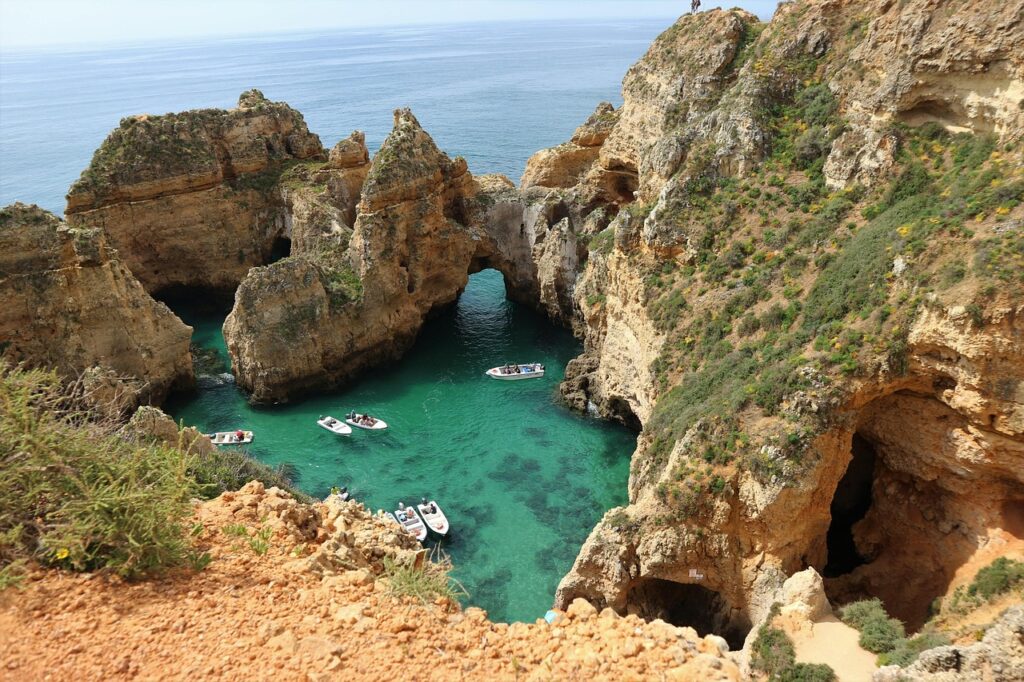
Day 9: Beach and coast exploration. Drive to Ponta da Piedade for sunrise (the rock formations are stunning). Then explore the coastline, Praia da Marinha is widely considered one of Europe’s most beautiful beaches. If you’re feeling active, there’s a coastal hike called the Seven Hanging Valleys Trail (about 5.5 km one way) that’s one of the best walks I’ve done anywhere. In the afternoon, drive west to Sagres and Cape St. Vincent, the southwestern tip of mainland Europe.
Day 10: Head back. Drive back to Faro for your flight, or if your flight leaves from Lisbon, budget about 3 hours for the drive (or take the train).
What to Skip (Honest Takes)
Tram 28 in Lisbon. I know it’s iconic, but unless you catch it at 8 a.m. on a Tuesday, you’ll be packed in like sardines with 40 other tourists and it’s prime pickpocket territory. Walk the route instead, it takes about 45 minutes and you’ll see more.
Stacking palaces in Sintra. Two is the max. I’ve seen people try to hit four in one day, and by palace three they’re exhausted, hangry, and not enjoying anything. Pena and Quinta da Regaleira, then get lunch and take the train back.
Overpriced restaurants on Rua Augusta. Lisbon’s most famous pedestrian street is wall-to-wall tourist restaurants with picture menus and guys trying to wave you in from the sidewalk. Walk two blocks in any direction and you’ll eat twice as well for half the price.
Time Out Market for a full meal. Hear me out, it’s a cool space and it’s worth walking through. But the food stalls are overcrowded and overpriced compared to the actual restaurants they’re associated with. Get a snack or a drink, but eat your real meals elsewhere.
How to Get Around Portugal
You don’t need a car for most of this trip. Seriously, save your money.
Between cities: Portugal’s train system, run by CP (Comboios de Portugal), is reliable and reasonably priced. The Alfa Pendular (high-speed) train from Lisbon to Porto takes about 2.5 hours and costs $25 to $35 one-way when booked on the official CP website. Always book through the official site, not third-party resellers who markup the price.
Within Lisbon: The metro is clean, efficient, and a single ride costs about $1.70 with a Viva Viagem card. Bolt and Uber are plentiful and cheap for short trips ($4 to $6 within the center).
Within Porto: Very walkable. The metro connects you to Matosinhos and the airport. Otherwise, just walk.
The Algarve: This is the exception. Rent a car for the Algarve portion (about $30 to $50 per day). Public transport between beach towns is spotty and time-consuming. The freedom to pull over at a random beach is worth the rental cost.
Portugal Travel Tips (The Practical Stuff)
Visa info: U.S. citizens don’t need a visa for stays under 90 days. Just bring a valid passport with at least 3 months of validity beyond your planned return date. Note: the EU’s ETIAS system (a quick online pre-travel authorization, similar to the U.S. ESTA) is scheduled to launch in late 2026. It’ll cost about €7 and takes minutes to apply. Check the official ETIAS website for the latest launch date before you book.
Currency: Portugal uses the euro (€). As of early 2026, $1 USD is roughly €0.92. Check XE.com for current rates before your trip. ATMs (called Multibanco) are everywhere and usually offer the best exchange rates. Avoid the Euronet ATMs with screens in English that charge hefty fees, use bank-attached ATMs instead.
Language: Portuguese. Most people in Lisbon and Porto working in tourism speak English, but learning a few basics goes a long way. “Obrigada” (thank you, if you’re a woman) or “obrigado” (if you’re a man) is the bare minimum. My Mandarin is significantly more useful than my Portuguese, but I’ve found that attempting even bad Portuguese makes locals genuinely happy.
Tipping: Not expected the way it is in the U.S., but a 5 to 10% tip at restaurants is appreciated. Rounding up taxi/Bolt rides is normal.
Safety: Portugal is one of the safest countries in Europe. The main concern in Lisbon and Porto is petty theft (pickpocketing in tourist areas, on trams, etc.). Keep your phone in your front pocket, don’t leave bags hanging on chairs at restaurants, basic stuff.
Data/SIM cards: Pick up a Portuguese SIM at the airport from Vodafone or NOS. A 15-day tourist plan with data runs about $15 to $20 and saves you from roaming charges.
Shoes: Bring comfortable shoes with actual grip. Lisbon’s cobblestone streets are beautiful but extremely slippery, especially when wet. Sandals and smooth-soled sneakers are a mistake.
Frequently Asked Questions About a 10-Day Portugal Trip
Is Portugal cheaper than Spain for a 10-day trip?
Generally, yes. Portugal’s accommodation, food, and transportation costs run about 15 to 25% lower than Spain’s major tourist cities like Barcelona and Madrid. A mid-range hotel in Lisbon averages $100 to $150 per night, while equivalent rooms in Barcelona often start at $140 to $200. Street food, wine, and local restaurants are noticeably cheaper across the board in Portugal.
Can you do Portugal without renting a car?
Absolutely. The train system connects Lisbon, Porto, and most major towns efficiently. The only place where a car really helps is the Algarve, where beaches and coastal towns are spread out and public transport is limited. For the Lisbon and Porto portions of your trip, a car is more hassle than help, parking is expensive and driving in narrow old-town streets is stressful.
Is 10 days enough to see Portugal?
Ten days is enough to see the highlights comfortably. You can cover Lisbon, Porto, and one additional region (the Algarve, the Douro Valley, or the Sintra area) without feeling rushed. If you want to add the Azores, Madeira, or spend time in the Alentejo region, plan for at least two weeks. Trust me on this one: three places in 10 days beats five places in a blur.
What’s the best way to book trains in Portugal?
Book through the official CP website directly. Tickets go on sale about 60 days in advance, and early booking can save you 30 to 40% on the popular Lisbon-to-Porto route. A second-class Alfa Pendular ticket bought in advance costs about $20 to $25, while last-minute tickets can run $35 to $40. Third-party booking sites typically add a markup of $5 to $15 for no reason.
Should I visit Lisbon or Porto first?
Start in Lisbon if you’re flying in from the U.S. Almost all direct flights from American airports land in Lisbon, and starting there lets you work your way north to Porto before potentially flying home from Porto (or back to Lisbon). If you can find an open-jaw flight (flying into one city, out of the other), that saves you a half-day of backtracking.
Is the Algarve worth adding to a 10-day trip?
It depends on what you’re after. If beaches and coastal scenery are important to you, the Algarve is stunning and worth 2 to 3 days. But adding it means either a flight from Porto to Faro or a long 6 to 7 hour train ride. If you’d rather go deeper into Lisbon and Porto instead of rushing to a third region, that’s a totally valid call, and your trip won’t feel incomplete without it.
Do I need to book restaurants in advance in Portugal?
For most tascas and casual restaurants, no. But for popular spots like Cervejaria Ramiro in Lisbon (the most famous seafood restaurant in the city), Taberna da Rua das Flores, or any high-end dinner spot, book at least a few days ahead, especially on weekends. In Porto, the food scene is a little more relaxed, but weekend dinner reservations at well-known spots are still smart.
What should I pack for 10 days in Portugal?
Layers. Even in shoulder season, Lisbon mornings can be cool (55 to 60°F) and afternoons warm (75 to 80°F). Bring comfortable walking shoes with good grip for cobblestones, a light rain jacket (especially for Porto, which gets more rain than Lisbon), and one slightly nicer outfit if you want to do a fancier dinner. Portugal is casual, so you don’t need to overthink it.
Portugal keeps climbing travel lists for good reason. It’s one of the few places in Western Europe where you can eat world-class food, stay in beautiful hotels, drink incredible wine, and walk through centuries of history without the price tag of Paris, Rome, or Barcelona. The fact that it’s a direct 7-hour flight from New York doesn’t hurt either.
If you’re choosing between Portugal and one of the “bigger name” European trips, and your budget matters (whose doesn’t?), I’d pick Portugal every time for a first trip to Europe. It’s the kind of place where the quality-to-cost ratio genuinely surprises you, and you come home feeling like you traveled well without wrecking your savings. And honestly? You’ll come back. Everyone comes back.
If you’re also considering the Balkans as an underrated Europe alternative, that’s another region where your money goes incredibly far, but with a completely different vibe.